✨ New Arrivals Just Dropped!Explore







Pair of 19th century Zen Japanese Antique Free-Standing Folding Screen Byobu
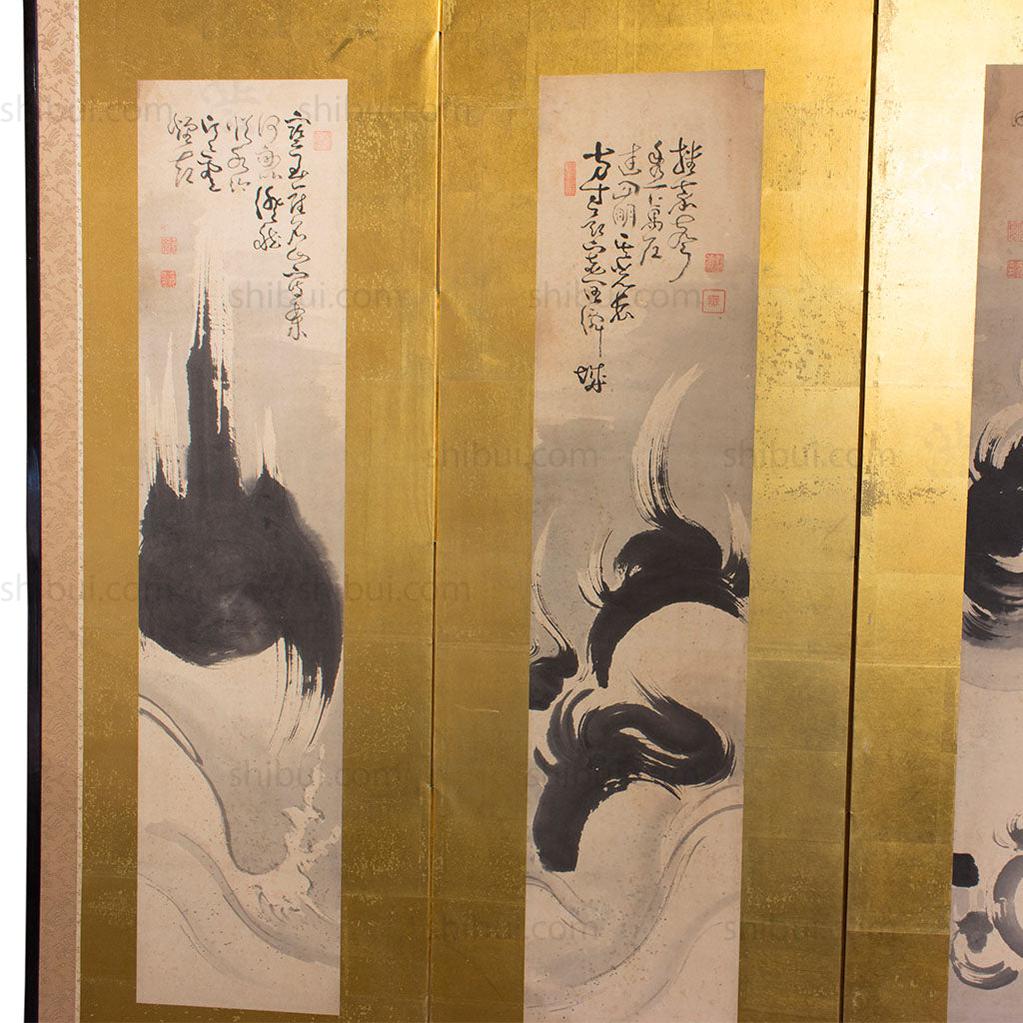
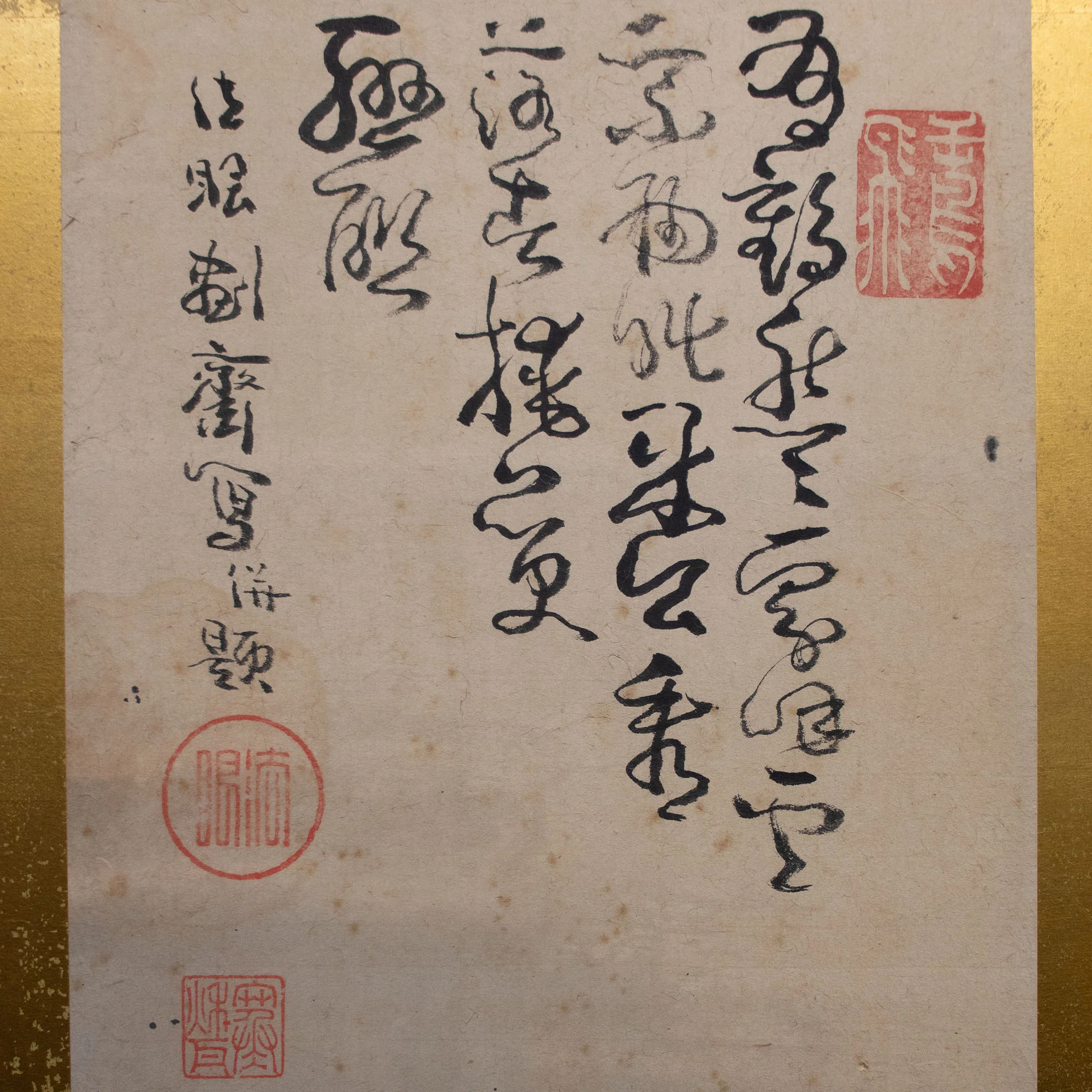
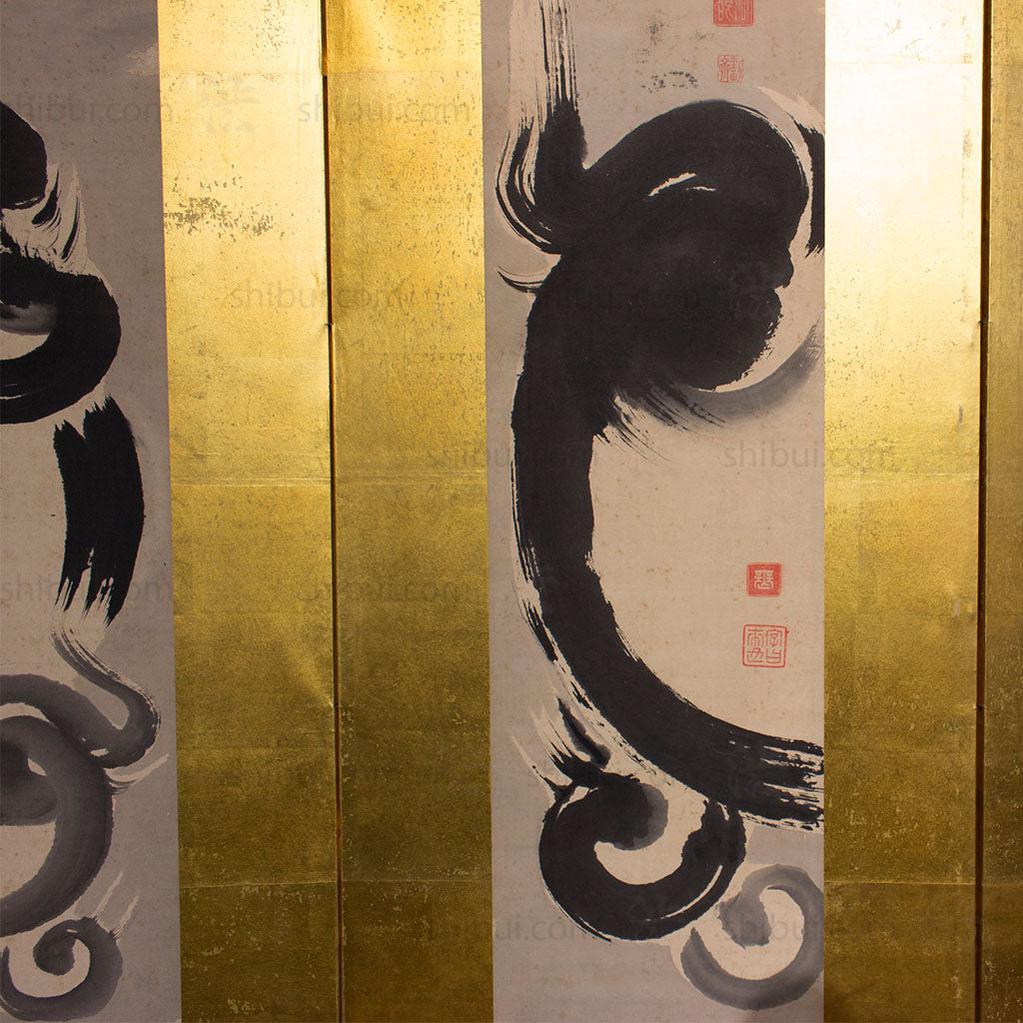
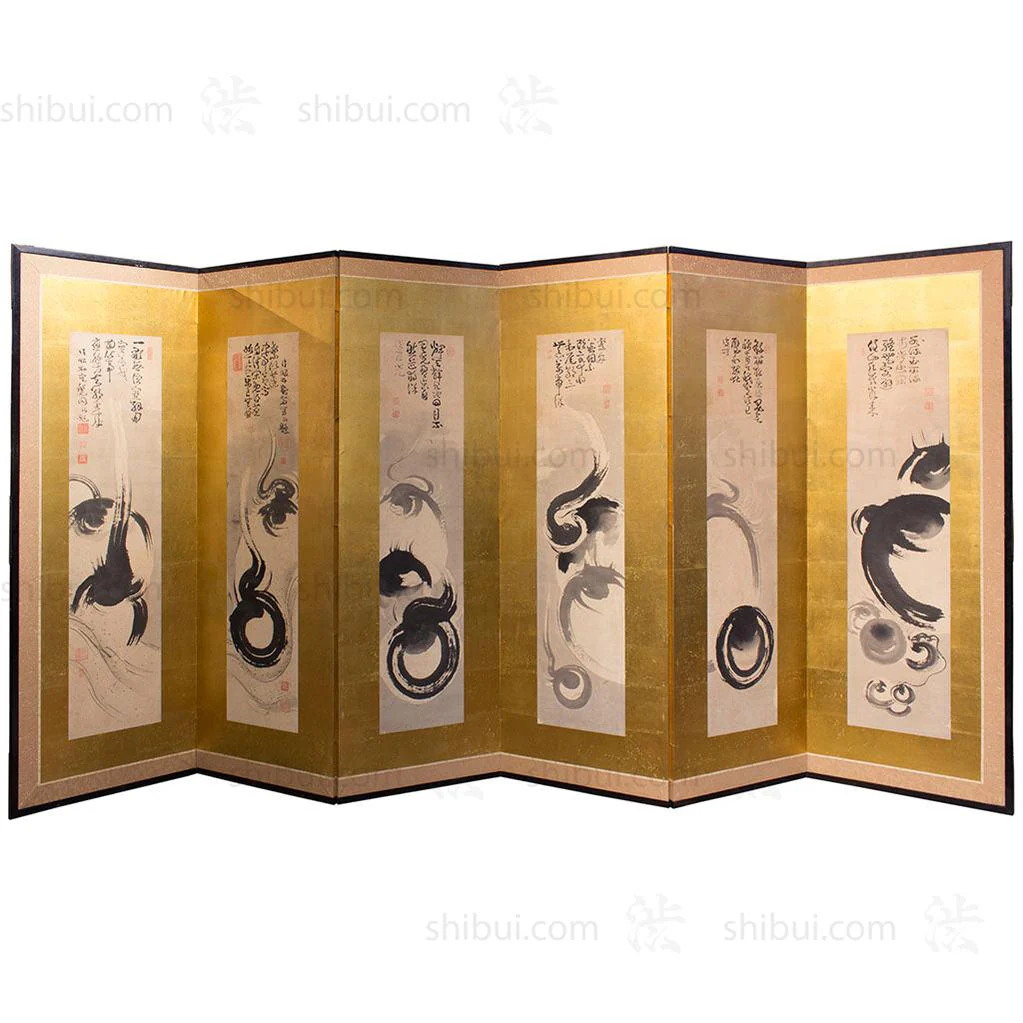
Pair of six-paneled zen byobu (wind wall) with imagery of sacred flaming jewels. Interspersed are Zen writings. Signed - Inoue Kanshu 1807-1880. He was born in Hyogo but spent most of his painting career in Kyoto.
井上 寒甃 Inoue Kanshu (1807-1880) Real name: Seizaemon 清左衛門 (or Seizaburo 清三郎) Common name: Renhachi 連八 Pen name: Kanshu 寒甃 Place of birth: Hamasaka, Hyogo Prefecture
He studied and trained in Kyoto.- In the late Ansei era, he resided at Jiun-ji Temple 慈雲寺, a sub-temple of Shokoku-ji Temple 相国寺, and devoted himself to Zen training. (1860)- He mastered works such as the Hekiganroku 碧巌録 and the poetry of Kanzanshi 寒山詩.- He created calligraphy and paintings based on the spirit of Zen and is known for his resolute yet unconventional style.- Later, he became a teacher at the Imperial Court and was granted the title of Hogen 法眼 (a high rank in Zen Buddhism).- He remained single throughout his life, devoting himself to training and calligraphy/painting, and left many works in his hometown.
<Description> Shokokuji 相国寺 is the head temple of the Rinzai sect 臨済宗 and oversees many sub-temples, including the famous Kinkakuji 金閣寺 and Ginkakuji 銀閣寺. In addition to holding a high position there, Inoue Kanshu was a teacher at the Imperial Palace in Kyoto. He remained single throughout his life, devoting himself to his training in painting and calligraphy. At the time, his way of life was so unconventional that it was difficult for the general public to understand, but his style of painting, which strove to capture the essence of things, is still innovative even to this day
- Gold leaf
- Ink on paper
- Brocade border and lacquered frame
- Mid 19th Century
- 125" x 62.5 (width, height)
$5,950.00
Original: $17,000.00
-65%Pair of 19th century Zen Japanese Antique Free-Standing Folding Screen Byobu—
$17,000.00
$5,950.00Product Information
Product Information
Shipping & Returns
Shipping & Returns
Description
Pair of six-paneled zen byobu (wind wall) with imagery of sacred flaming jewels. Interspersed are Zen writings. Signed - Inoue Kanshu 1807-1880. He was born in Hyogo but spent most of his painting career in Kyoto.
井上 寒甃 Inoue Kanshu (1807-1880) Real name: Seizaemon 清左衛門 (or Seizaburo 清三郎) Common name: Renhachi 連八 Pen name: Kanshu 寒甃 Place of birth: Hamasaka, Hyogo Prefecture
He studied and trained in Kyoto.- In the late Ansei era, he resided at Jiun-ji Temple 慈雲寺, a sub-temple of Shokoku-ji Temple 相国寺, and devoted himself to Zen training. (1860)- He mastered works such as the Hekiganroku 碧巌録 and the poetry of Kanzanshi 寒山詩.- He created calligraphy and paintings based on the spirit of Zen and is known for his resolute yet unconventional style.- Later, he became a teacher at the Imperial Court and was granted the title of Hogen 法眼 (a high rank in Zen Buddhism).- He remained single throughout his life, devoting himself to training and calligraphy/painting, and left many works in his hometown.
<Description> Shokokuji 相国寺 is the head temple of the Rinzai sect 臨済宗 and oversees many sub-temples, including the famous Kinkakuji 金閣寺 and Ginkakuji 銀閣寺. In addition to holding a high position there, Inoue Kanshu was a teacher at the Imperial Palace in Kyoto. He remained single throughout his life, devoting himself to his training in painting and calligraphy. At the time, his way of life was so unconventional that it was difficult for the general public to understand, but his style of painting, which strove to capture the essence of things, is still innovative even to this day
- Gold leaf
- Ink on paper
- Brocade border and lacquered frame
- Mid 19th Century
- 125" x 62.5 (width, height)